6 Cleveland Copier Lease Agreements Tips
I have seen it happen more times than I can count – a business owner calls us frustrated, stuck in a copier lease they never fully understood when they signed it.
The monthly payments were higher than they budgeted. The machine could not be returned early without a painful penalty. And nobody sat them down to explain what they were actually agreeing to.
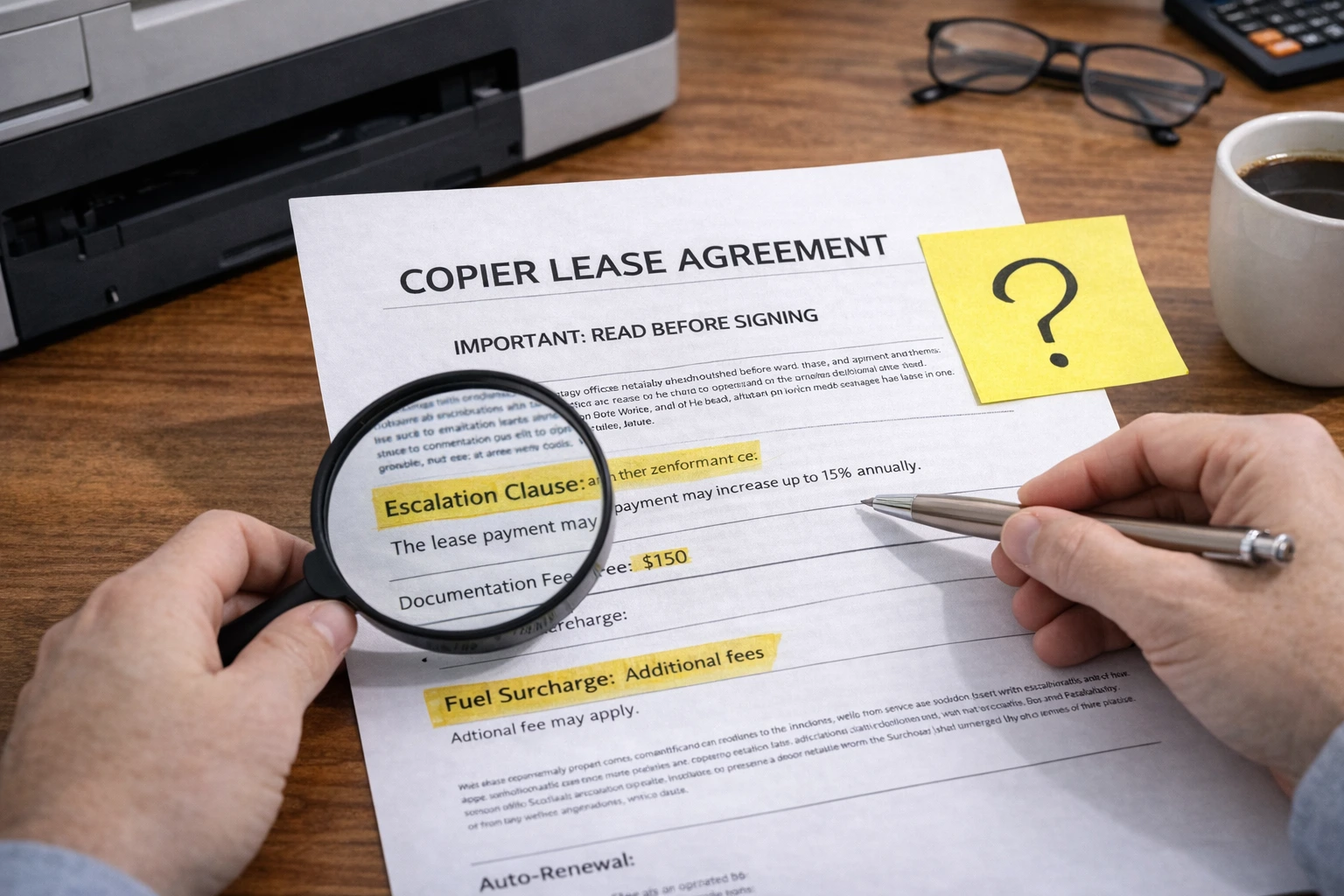
That is exactly why I wrote this. A copier lease is one of the most practical tools a business can use – lower upfront cost, predictable monthly payments, and access to equipment you could not otherwise afford on day one. But a copier lease is also a legally binding financial contract, and the lease agreement terms are written to protect the leasing company first.
Here is exactly what you need to read, understand, and negotiate before you put your name on any copier lease contract.
1. Identify the type of copier lease you are signing
Before you read anything else, you need to know which structure you are entering. There are two primary types, and they lead to completely different financial outcomes.
Fair market value lease (FMV)
A fair market value lease is the most common type of copier lease for businesses that want flexibility and lower monthly payments. At the end of the term, you have three choices: return the machine, renew at current market rates, or purchase it at fair market value – whatever that happens to be when the lease expires.
This is the right choice if you want to stay current with technology and upgrade equipment every few years without being locked into hardware that ages out.
$1 buyout lease
A $1 buyout lease – sometimes called a capital lease or finance lease – functions more like a loan. Monthly payments are higher, but at the end of the term you can purchase the equipment outright for one dollar. You effectively own it. This structure makes sense when the copier will have lasting value well beyond the lease period.
Knowing which structure you are in changes your monthly cost, tax treatment, end-of-lease strategy, and total cost of ownership. Never sign before confirming this point.
2. Check for automatic renewal language
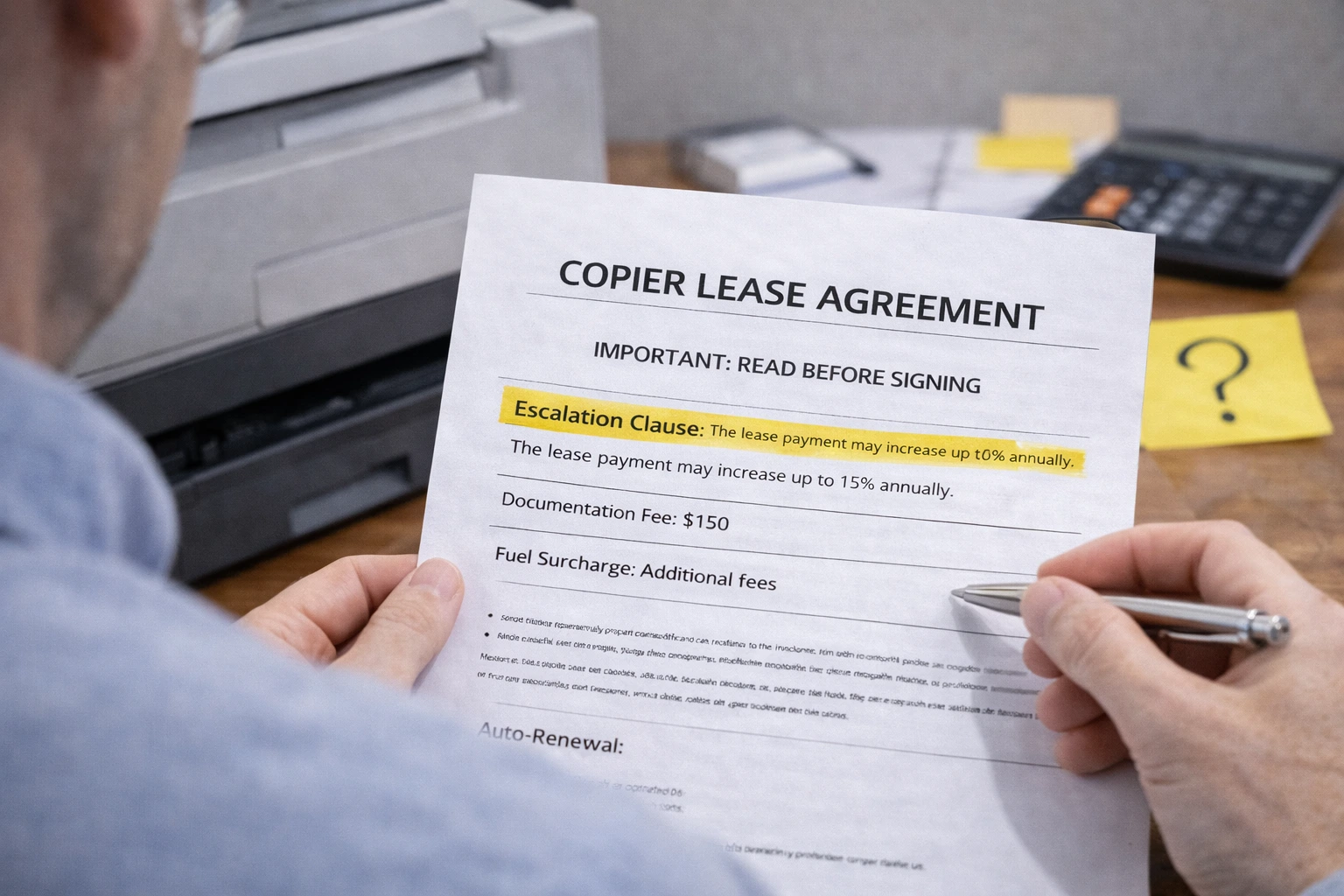
This is the clause that catches businesses off guard more than any other in the copier lease fine print.
Many lease agreement terms include an automatic renewal provision. If you do not notify the leasing company in writing – within a specific window, often 90 to 180 days before the term ends – the copier lease automatically renews. Sometimes for another 12 months at the same rate.
I have spoken with business owners who believed they were done, only to discover they had accidentally triggered another full year of payments by missing a notification deadline buried on page four of a contract they never re-read.
Set a calendar reminder at least six months before your lease term ends. Send any non-renewal notice by certified mail or a verified email with delivery confirmation.
3. Understand the early termination clause
Life moves fast. Businesses grow, downsize, relocate, and merge – often on timelines that do not align with a 48-month lease. The early termination clause in your copier lease tells you what it costs to exit the agreement before the term ends, and the answer is almost always uncomfortable.
Most leasing companies require you to pay the sum of all remaining monthly payments, sometimes with an added administrative fee on top. In some contracts that figure approaches the full remaining cost of the lease with no meaningful discount for exiting early.
Before signing, ask the leasing company to explain the exact formula they use. What would you owe at month 18? At month 30? Get that in writing. If they hesitate to answer clearly, that reluctance is telling you something important.
4. Know your end-of-lease options
Most people skip the final pages of a copier lease contract, which is exactly where the end-of-lease terms live. Your copier lease end options will generally include:
- Return the machine – at your shipping expense, which can reach several hundred dollars for large floor-standing units
- Renew or extend – continue the copier lease month-to-month or roll into a new fixed term
- Purchase at buyout price – fair market value for FMV leases, or the stated buyout amount for $1 buyout structures
Pay close attention to the return condition requirements. Many copier lease contracts specify that the machine must be returned in near-original condition. Unusual wear can trigger additional charges. Ask for the return standards in writing before signing anything.
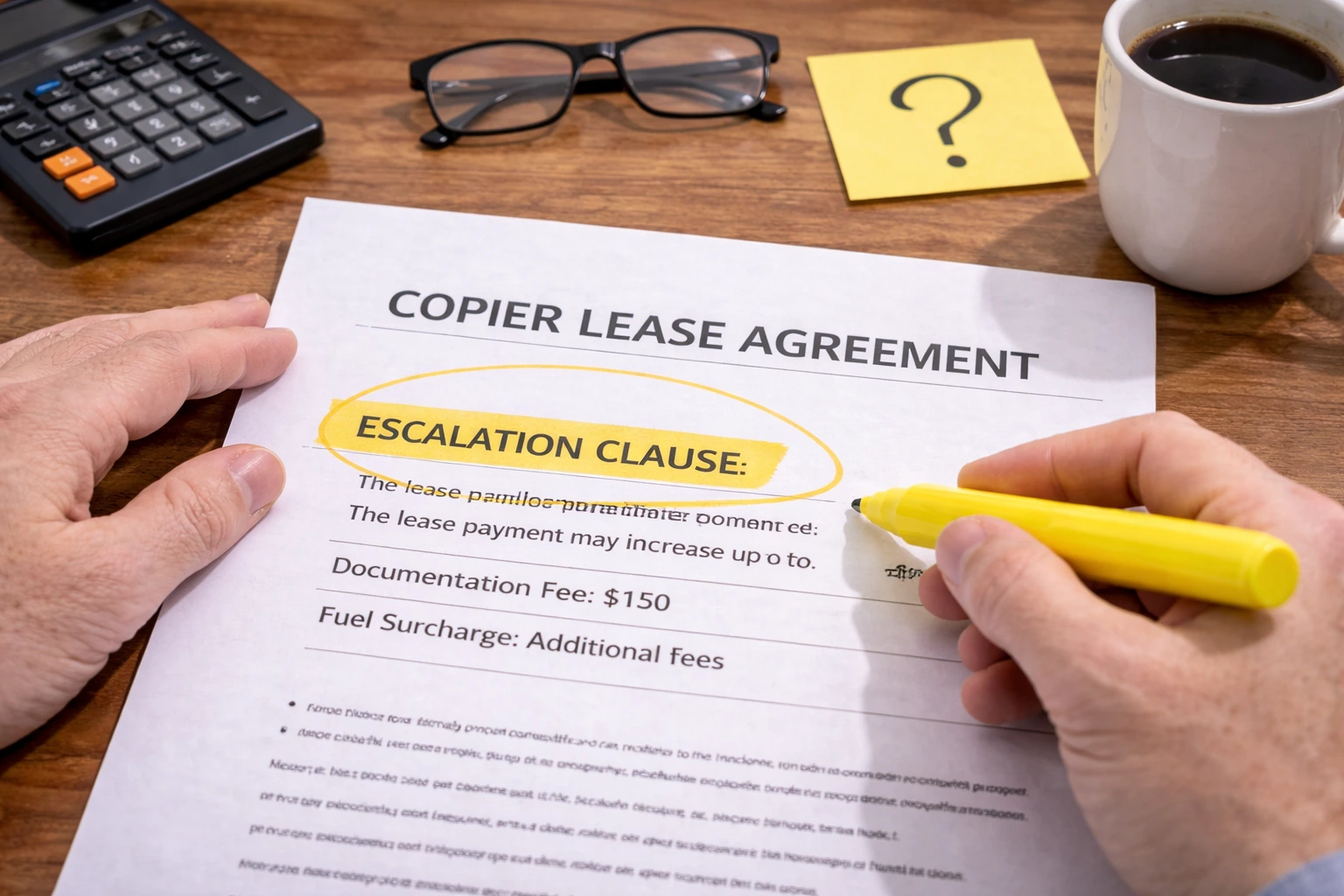
5. Watch for hidden costs in the fine print
The copier lease fine print typically contains a few items that are easy to overlook but expensive to discover late.
Overage charges
Most leases include a monthly page allowance. When your team prints beyond that limit, overage fees apply – often at a per-page rate that adds up quickly in a busy environment. Always confirm the included volume before comparing quotes.
Maintenance and toner
Some copier lease agreements bundle a full-service plan that covers toner, parts, and labor. Others include nothing beyond the machine itself. Make sure you know exactly what is and is not included before signing, because an uncovered service call can cost hundreds of dollars per visit.
Property taxes and insurance
Certain copier lease agreements require the lessee to pay applicable personal property taxes on the equipment and maintain insurance coverage on it throughout the term. These are small line items that appear nowhere in the sales conversation but can surface at year-end billing.
For a broader overview of how equipment leases are treated from a financial and tax perspective, the Small Business Administration’s finance guide is a solid starting point.
6. Negotiate the terms before you sign
Here is something most vendors will not tell you: most copier lease terms are negotiable. Leasing companies expect some degree of back-and-forth before a deal is finalized. You can often push for:
- A shorter auto-renewal notification window
- Reduced early termination penalties
- A bundled maintenance and toner package at a fixed rate
- A cap on per-page overage charges
Getting even one or two of these adjusted before signing can represent real savings over a 36 or 48-month term. Ask. The worst outcome is a no, and most of the time it is not.
Final thoughts
A copier lease done right is genuinely smart business – lower capital outlay, predictable budgeting, and access to quality equipment that keeps your office running. I am a real advocate for leasing, but only when you go in with your eyes open.
The copier lease fine print is not designed to trap you. But it will trap you if you ignore it. Read every page. Ask every uncomfortable question. And if anything in the contract is unclear, ask us – that kind of transparency is exactly what we are here for.